Data Science Course for Beginners: A Complete Guide to Start Your Career in Data Analytics
 Learning Management System by Prayug Editor | Mar 16, 2026


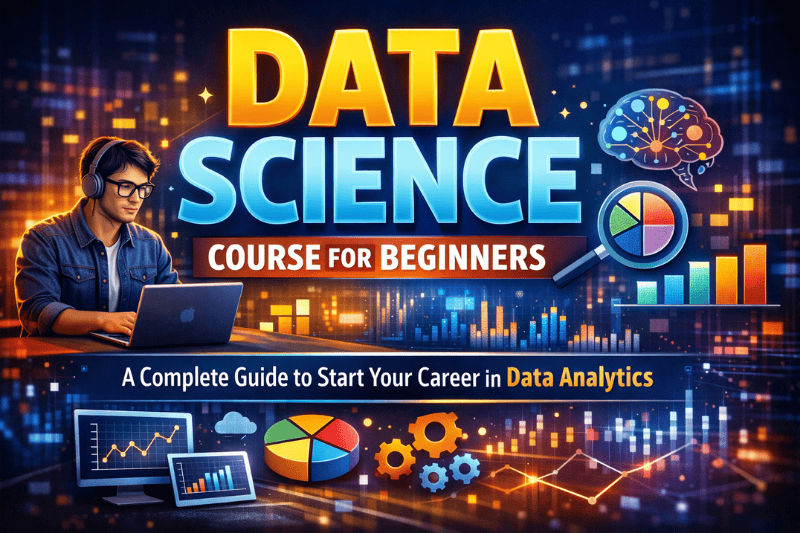
Data Science Course for Beginners: A Complete Guide to Starting Your Career in Data Analytics
In today’s digital world, every click, swipe, and purchase creates a trail of information. Whether you are scrolling through social media, shopping online, or making a digital payment, you are generating data. However, this raw information isn't very useful on its own. It only becomes valuable when experts step in to analyze it and find hidden patterns. This is where the magic of data science happens.
If you are looking to break into the tech industry but feel overwhelmed by where to start, enrolling in a data science course for beginners is a fantastic move. These programs are built specifically for people who don't have a background in coding or complex statistics. They provide a clear, step-by-step path to help you build a solid foundation.
In this guide, we will walk through what you can expect from your training, the essential skills you will pick up, and how top-tier institutes help students kickstart their professional journey.
What Exactly is Data Science?
Before we jump into the curriculum, let's simplify what data science actually is. Think of a data scientist as a digital detective. They collect, clean, and study massive amounts of information to help businesses make smarter choices. This field is a mix of a few different areas: math, statistics, basic computer programming, and business logic.
For instance, major companies use data science to:
- Predict what you'll buy next: Ever wonder how Netflix knows exactly what show you’ll like? That’s data science.
- Stop fraud: Banks use it to spot suspicious activity on your credit card instantly.
- Improve healthcare: Doctors use data to predict patient outcomes and find better treatments.
- Optimize delivery: Apps like Amazon use it to find the fastest routes for your packages.
Because these skills are so useful, almost every industry is hunting for talent. For those just starting out, getting the right beginner data science training is the most effective way to enter this high-growth career path.
Why is Data Science a Top Career Choice for Freshers?
It’s no secret that data science is one of the most talked-about jobs today. But why are so many people switching to this field? Here are a few simple reasons:
- Massive Job Growth: Companies are drowning in data and starving for people who can make sense of it. This means there are thousands of open roles waiting for trained individuals.
- Great Pay: Even at the entry-level, data roles tend to offer higher salaries compared to many other tech positions. As you get better, your earning potential grows quickly.
- Work Anywhere: You aren't stuck in one industry. You could work in sports, fashion, finance, healthcare, or gaming. Every sector needs data experts.
This is why many students are looking for a data science course for freshers. It bridges the gap between having no experience and being ready for a professional role.
What Will You Learn in a Beginner’s Course?
A well-structured data science course for beginners won't throw you into the deep end immediately. Instead, it starts with the basics and builds your confidence. Here is a breakdown of the core pillars you will master.
1. The Basics of Programming
You don't need to be a coding genius. Most courses start with Python because it is the easiest language to learn and the most popular in the data world. You will learn how to:
- Write simple instructions for the computer.
- Organize information using data structures.
- Use tools like Pandas and NumPy to sort through spreadsheets quickly.
2. Mastering Data Analysis
Once you can code a little, you’ll learn how to "talk" to data. This involves taking a messy pile of information and cleaning it up. You’ll learn how to find averages, spot trends, and figure out why certain things are happening in a business.
3. Data Visualization (The Art of Storytelling)
Numbers can be boring, but charts are exciting. You will learn how to turn complex tables into beautiful, easy-to-understand graphs.
- Tools you’ll use: Matplotlib, Seaborn, and even professional software like Tableau or Power BI.
- The Goal: To show a manager exactly what the data means at a single glance.
4. An Introduction to Machine Learning
This sounds fancy, but at a beginner level, it’s just about teaching a computer to make predictions based on past data. You will learn the basics of how "recommendation engines" work and how computers can learn to categorize information automatically.
The Power of Learning from the Ground Up
A common fear is: "I'm not a "math person," can I still do this?" The answer is a resounding yes. When you choose to learn data science from scratch, the curriculum is designed to be accessible.
Institutes like Prayug focus on a "hands-on" approach. Instead of just reading books, you spend your time working on real-world problems. This method ensures that even if you have zero technical background, you can slowly become an expert. Learning from scratch allows you to understand the "why" behind the data, not just the “how.”
Career Paths: Where Can You Work?
After finishing a data science course for beginners, you won’t just be a "Data Scientist." There are several different roles you can apply for:
- Data Analyst: You look at past data to explain what happened and why.
- Business Analyst: You use data to suggest ways the company can save money or grow faster.
- Junior Data Scientist: You work under a senior pro to build predictive models and run experiments.
- Data Visualization Specialist: You focus entirely on creating dashboards and visual reports for executives.
Each of these roles is a stepping stone. Most people start as an analyst and move into more complex roles as they learn more about AI and Big Data.
Why Practical Training Matters
You can’t learn to ride a bike by watching a video, and you can’t learn data science just by listening to a lecture. The best institute for data science course will always emphasize "doing" over "listening."
Practical training allows you to:
- Work with Real Datasets: Learn how to handle "dirty" data that has mistakes or missing pieces.
- Build a Portfolio: By the time you finish, you’ll have a collection of projects you can show to employers to prove you know your stuff.
- Gain Confidence: Solving a real problem makes the transition to a real job much smoother.
At Prayug, the focus is on simulation. Students tackle challenges that mimic what they will actually face in an office. This makes the transition from student to professional much easier.
How to Pick the Best Institute
With so many options out there, how do you choose? If you are searching for the best institute for data science course, keep an eye out for these five things:
- Updated Curriculum: The tech world moves fast. Make sure they are teaching the latest tools.
- Expert Mentors: It’s better to learn from someone who has actually worked as a data scientist.
- Project-Based Learning: Ensure you will be building things, not just taking quizzes.
- Career Support: Look for places that offer resume help and interview prep.
- Simplified Teaching: For a beginner, you need a place that explains things in plain English, not heavy jargon.
Looking Toward the Future
The world isn't going to start producing less data. If anything, our reliance on information is growing. With the rise of Artificial Intelligence (AI) and automation, data science is becoming the backbone of the global economy.
For a beginner, starting now means you are getting in at the right time. The skills you learn today—coding, analytical thinking, and visualization—will be valuable for decades to come. Whether you want to work for a tech giant or a small startup, these skills are your ticket to a stable and exciting future.
Final Thoughts
Taking a data science course for beginners is a life-changing step. It might feel like a big mountain to climb at first, but with a structured path and the right support, it’s completely doable. By mastering the fundamentals—Python, data cleaning, and visualization—you set yourself up for success in a world that runs on information.
Training centers like Prayug are dedicated to making this journey simple and effective. They provide the tools, the mentorship, and the practical environment needed to turn a curious beginner into a confident professional.
Ready to start your journey? The world of data is waiting for you!
Visit: www.prayug.com
Top Blog Posts