Digital Marketing vs SEO Career – Which Is Better in 2026? Salary, Scope & Skills WithPrayug
 Learning Management System by Prayug Editor | Mar 17, 2026


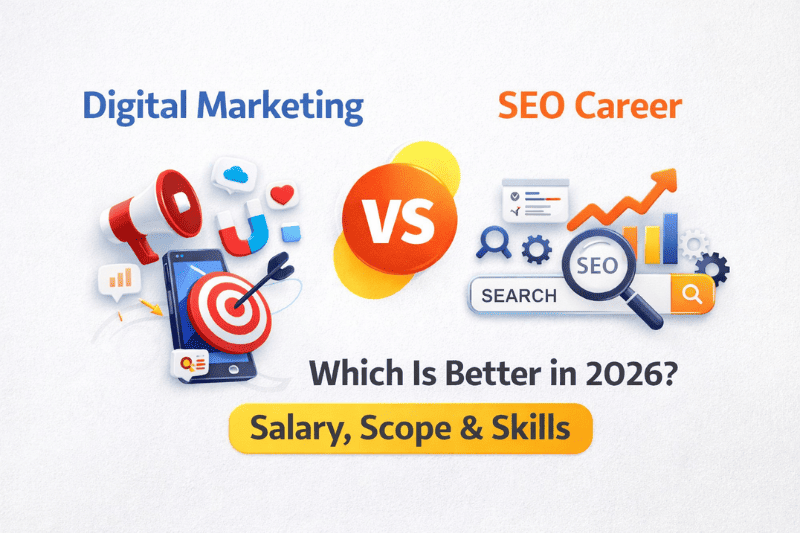
Digital Marketing vs SEO Career: Which One Is Better in 2026?
Let’s be real — when people say “I want to work in digital marketing,” they’re not usually referring to one specific role. They mean something online, something modern, something that pays decently, and doesn’t feel stuck in the old routine.
Then you open YouTube, talk to a few friends, or check job posts… and suddenly it gets messy.
One person says, “Learn digital marketing. It has everything.”
Another says, “SEO is the safest. Specialise and you’ll always be needed.”
And you are just left with a terribly normal question:
Should I choose digital marketing as a career, or focus only on SEO?
That’s just fine: this is the simple reality in 2026, both are genuine career paths, and both are in demand. Businesses aren’t going offline. They’re doubling down online. That means they need people who can bring customers—through content, ads, social media, email, and yes, through Google search.
What you should choose depends less on “scope” and more on something people don’t talk about enough:
What kind of work do you actually enjoy doing every day?
And that’s exactly why Prayug’s format works – it allows students to both experiment with that through projects before they lock into a single track.
So what is Digital Marketing, really?
Digital marketing is basically: helping a business grow online.
Not in theory. In numbers.
Traffic, leads, sales, bookings, sign-ups—whatever the business wants.
All the while digital marketing is broad because growth can come from many places:
- Instagram, YouTube, LinkedIn
- Google Ads and paid campaigns
- Content and blogging
- Email and WhatsApp funnels
- SEO and website optimization
- Analytics and conversion improvements
In many companies, a digital marketer is the person who keeps asking:
- “Where are we losing customers?”
- “Which channel is giving results?”
- “What should we improve this month?”
If you enjoy variety—leaping between content, creatives, ads and data, or planning—digital marketing generally feels fun, not dull.
And what is SEO?
SEO is a narrower lane, but it’s not “small.”
It’s simply the work of making sure a website gets found on Google when people search.
And that matters because most users don’t search like researchers. They search like normal people:
“best coaching near me”
“budget phone under 20000”
“skin doctor in indore”
“digital marketing course fees”
SEO professionals help websites show up for these searches and earn traffic without paying for each click.
The work includes things like:
- finding what people actually search (keyword + intent)
- Enhancing pages (titles, headings, internal linking, content quality)
- Resolving technical problems (speed, mobile issues, indexing, crawling)
- building authority (links, mentions, trust signals)
- keeping tabs on what’s working and what is falling through the cracks
SEO is slower than ads, but it’s powerful when it clicks. It’s like building an asset instead of renting attention.
The difference most people miss
People compare digital marketing vs SEO like they’re competing. They’re not.
Digital marketing is a whole kitchen.
SEO is one speciality dish—done properly.
Digital marketing roles often involve jumping between tasks. SEO roles are more focused and deeper.
If you enjoy working with multiple tabs open, planning campaigns, brainstorming content, modifying ads, and viewing reports, then digital marketing is the place for you.
If you prefer a more structured problem-solving environment—like figuring out “why did traffic drop?”, “why isn’t this page indexing?”, or “what’s beating us and how?”—you’ll also find SEO quite rewarding.
That’s the real difference. Not definitions.
Skills you actually need (not the fancy list)
If you choose Digital Marketing
You don’t need to be a genius at everything. But you should be comfortable with:
- writing or guiding content that doesn’t sound robotic
- understanding basic paid ads logic (even if you don’t specialise in it)
- reading analytics without panicking
- communicating clearly with designers, clients, teams
- thinking like a customer: “why would someone click this?”
Digital marketing rewards people who are adaptable. The field changes often, and that’s not a problem if you enjoy learning.
If you choose SEO
SEO needs more patience and detail. Useful skills include:
- understanding search intent (not just keywords)
- improving content without stuffing it
- basic technical awareness (indexing, crawl issues, speed, structure)
- comfort with tools (Search Console, analytics, SEO tools)
- spotting patterns in performance over time
The fastest growing SEO people are generally those that can tell you why something happened and not just regurgitate numbers.
Job roles and salary (what you can realistically expect)
Common digital marketing roles
- Digital Marketing Executive (campaign support, coordination)
₹3–6 LPA - Social Media Manager (brand voice + engagement + growth)
₹4–8 LPA - PPC Specialist (ads + budget + ROI)
₹5–9 LPA - Content Marketing Manager (content strategy + leads)
₹6–12 LPA
Common SEO roles
- SEO Executive (on-page, keywords, basic audits)
₹3–5 LPA - SEO Analyst (tracking, audits, reporting, insights)
₹4–7 LPA - Technical SEO Specialist (speed, indexing, site structure)
₹6–10 LPA - SEO Manager (strategy + team + growth targets)
₹8–15 LPA
A practical note: salary depends heavily on proof of work.
If you can show results—rank improvements, traffic growth, campaigns you handled—your pay jumps faster. This is where project-based learning (like Prayug’s) helps, because you’re not empty-handed in interviews.
Digital Marketing vs SEO salary in 2026 (quick view)
Digital marketing tends to have a higher ceiling as you can transition into performance marketing, growth, analytics, or strategy roles.
- Digital Marketing: Rs 3-6 LPA for a fresher → Rs 15-25 LPA for a senior (varies a lot)
- SEO: ₹3-5 LPA for freshers → ₹12-18 LPA for seniors (higher packages possible with technical work/international work)
SEO can still pay extremely well, especially if you get really good at technical SEO or work with international clients – but it’s a smaller ladder.
Future scope in 2026: what’s safer?
Both are safe — if you keep your wits about you. Digital marketing is growing as companies continue to spend more online. Tools are becoming more intelligent, but businesses still need people who understand their customers, their strategies, and how they perform.SEO is also here to stay – because search is not going away.
But SEO keeps changing. Anyone who treats it like a “one-time learning skill” gets outdated quickly. People who keep learning stay valuable.
Okay, so what should you choose?
Choose Digital Marketing if you:
- want variety in your work
- like creativity + strategy
- want more career options (ads, social, content, analytics)
- enjoy fast testing and quick feedback loops
Choose SEO if you:
- like analysis, structure, and long-term improvements
- enjoy technical problem-solving
- want a clear specialist identity
- can stay consistent even when results take time
And if you’re still unsure: start broad for 1–2 months, touch everything, then specialize. That’s not “confusion.” That’s smart.
Conclusion
When deciding between digital marketing and SEO as a career in 2026, don’t chase what sounds trending. Pick which one works on how the brain of you works.
Digital marketing grants you flexibility and reach.
SEO offers depth and organic long-term value.Both disciplines can lead to solid careers, especially if you get your learning through real projects (or use real tools) and create a portfolio that demonstrates you can do the work. That’s exactly where training platforms like Prayug make the difference.
Top Blog Posts