From Classroom Learning to Job Skills – The Importance of Practical Training
 Learning Management System by Prayug Editor | Feb 12, 2026


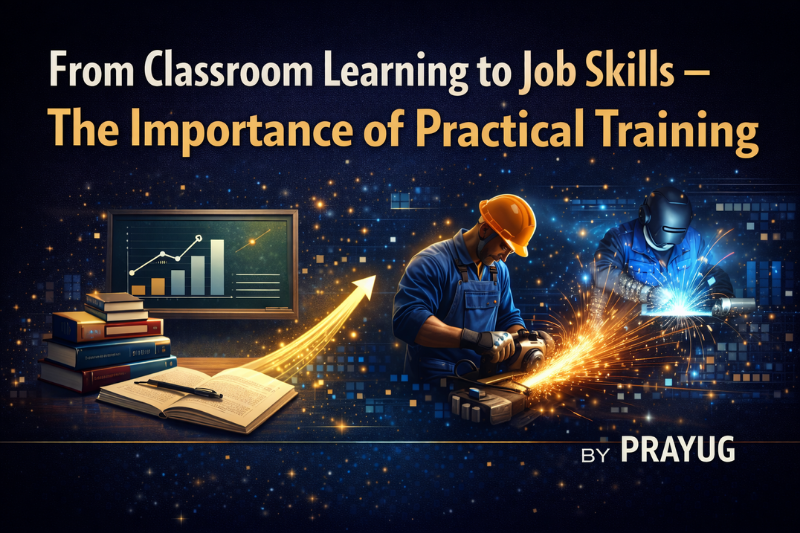
Classroom learning has been the foundation of education for many years. Students learn in lectures, take notes, learn definitions, and take tests, as a result, students are able to learn concepts in theory; however, when they do not work, they struggle with creating application-based skills in the real world.
Students have difficulty making the shift from education to employment, as there is vast potential for going through the motions of learning concepts, but very little for applying those concepts in a practical scenario. The lack of alignment between theory and practice creates a significant problem for students when employers require job-ready skills not just from an academic perspective. Thus, the importance of practical training is critical to successfully apply classroom learning into real-world employment skills; as a result, several platforms such as Prayug have emerged to align education to the expectations of employers.
Why Classroom Learning Alone Does Not Produce Job Ready Skills
Classroom learning is beneficial, but the majority of learning is focused on theory and therefore does not equip students to demonstrate their skills outside of a testing environment; consequently, students are often confused as how to translate theory to practice, causing many students to experience many common problems.
And the common problems include:
- Difficulty handling real tasks independently
- Lack of exposure to tools used in workplaces
- Uncertainty when solving real problems
- Low confidence during interviews
These challenges don’t reflect a lack of intelligence—they reflect a lack of practical exposure.
What Practical Training Actually Adds
Practical training shifts learning from passive to active.
Instead of only listening or reading, students:
- Work directly on tasks
- Use real tools and systems
- Make mistakes and learn from them
- Receive feedback and improve
This experience builds competence that cannot be gained through theory alone.
Turning Knowledge into Job Skills
When compared to having knowledge about something, having the ability to act is an important distinction.
Students gain practical training experience by:
- Apply classroom concepts in real situations
- Understand how work is actually performed
- Connect theory with outcomes
- Develop problem-solving ability
This transformation is what turns learners into professionals.
Gaining Confidence Through Practical Experience
Having the ability to perform will increase your level of confidence.
When students practice real tasks:
- Fear of the unknown reduces
- Decision-making improves
- Communication becomes clearer
- Independence grows
At Prayug, confidence-building is seen as a natural result of repeated hands-on practice.
Reasons Why Companies Look for Employees with Practical Experience
Employers need employees who will be able to contribute to their employers immediately in order to remain competitive in their industry.
Practically trained candidates:
- Adapt faster to workplace tools
- Require less onboarding time
- Handle responsibility better
- Deliver results sooner
This is why employers increasingly prioritize practical ability over purely academic performance.
Real life work experience helps students to learn what they can do.
Some students do not know what type of career to pursue because the student has never actually done real work.
When students are given actual work experience, they will:
- Identify areas they enjoy
- Recognize strengths and weaknesses
- Make informed career decisions
- Build clarity about future roles
This knowledge of oneself is important for all successes throughout one's career.
Learning Does Not Happen Exclusively Inside the Classroom or Exams
Theories discussed in textbooks will provide a foundation, but textbooks cannot provide you with real-world examples of how things react.
Students need practical education:
- Real constraints and deadlines
- Unexpected challenges
- Changing requirements
- Team-based work situations
This prepares students for the realities of professional life.
Why Practical Training Supports Career Transitions
Practical learning is especially helpful for:
- Students from non-technical backgrounds
- Graduates struggling to find jobs
- Professionals switching careers
Hands-on training will increase your level of confidence almost instantly and lower barriers of entry into a career.
Creating Long-Term Effects from a Short Training Experience
Even if you only participate in preparation for a short period of time, you can have a long-lasting effect from your training.
Students often gain:
- Employable skills
- Portfolio-worthy work
- Interview confidence
- Early career momentum
This early progress encourages continued growth and learning.
How Prayug Bridges Classroom Learning and Careers
At Prayug, practical training is not treated as an add-on—it is central to learning.
The approach focuses on:
- Realistic tasks instead of artificial exercises
- Skill application over rote learning
- Continuous feedback and improvement
- Preparing students for actual job roles
This ensures students are ready for real-world challenges.
Redefining Education as It Relates to Today’s World
Education today cannot simply rely on traditional classroom instruction or assessment methods. Definition of professional success in the future will centre on how well someone can use the knowledge they have, the ability to solve problems and adapt quickly to meet client needs.
As part of this evolution, practical training links what someone learns in an educational setting to what will be required of them on the job.
Conclusion
Classroom instruction creates understanding, while practical experience produces the skills necessary to perform a job successfully. In today’s highly competitive workplace, students need both types of educational interventions; however, practical experience is often the deciding factor in the hiring process for all job candidates.
To help students convert their theoretical knowledge to employable job skills, through experiential learning opportunities like those provided by Prayug, students will develop the confidence, clarity of thought, and preparedness to enter into their career after graduation.
Visit: www.prayug.com
Top Blog Posts