ROAS Full Form in Digital Marketing: Meaning, Formula & How to Improve It
 Learning Management System by Prayug Editor | Mar 13, 2026


In the world of digital marketing, businesses constantly track the performance of their advertising campaigns. One of the most important metrics used by marketers and advertisers is ROAS. If you are running campaigns on platforms like Google Ads, Facebook Ads Manager, or Google Analytics, understanding ROAS can help you measure whether your ads are profitable or not.
In this blog, we will explain the ROAS full form in digital marketing, how it works, how to calculate it, and how you can improve it for better campaign performance.
ROAS Full Form in Digital Marketing
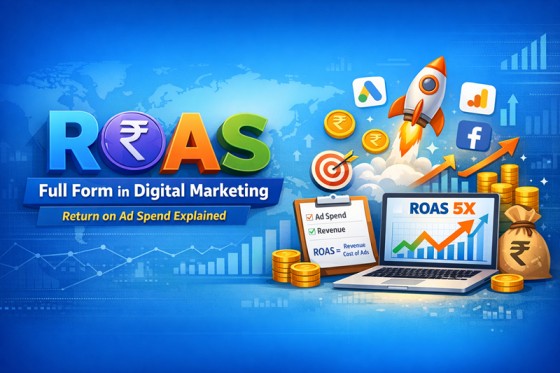
ROAS stands for Return on Ad Spend.
It is a marketing metric that measures the revenue generated for every rupee spent on advertising.
In simple words, ROAS tells you how much money you earn from the money you spend on ads.
Example
If you spend ₹10,000 on ads and generate ₹50,000 in revenue, your ROAS will be 5:1.
This means that for every ₹1 spent on ads, you earned ₹5 in revenue.
ROAS is widely used in performance marketing, e-commerce advertising, lead generation campaigns, and online course promotions.
ROAS Formula in Digital Marketing
The formula for ROAS is simple:
ROAS = Revenue from Ads ÷ Cost of Ads
Example:
- Ad Spend = ₹20,000
- Revenue Generated = ₹80,000
ROAS = 80,000 ÷ 20,000 = 4
So your ROAS is 4X.
This means every ₹1 spent generated ₹4 in revenue.
Why ROAS is Important in Digital Marketing
ROAS helps marketers understand whether their advertising campaigns are profitable or wasting money.
Here are some major reasons why ROAS is important.
1. Measures Advertising Performance
ROAS helps businesses track which ads are generating revenue and which ones are not performing well.
2. Helps Optimize Marketing Budget
If you know which campaigns generate higher ROAS, you can invest more budget in those campaigns.
3. Improves Decision Making
Marketers use ROAS to decide whether to pause, scale, or optimize campaigns.
4. Helps in Campaign Scaling
When a campaign shows strong ROAS, businesses increase the budget to generate more revenue.
What is a Good ROAS?
A good ROAS depends on your industry and business model.
However, many digital marketing experts consider:
- 2:1 ROAS – Minimum acceptable
- 3:1 ROAS – Good performance
- 4:1 ROAS or higher – Excellent performance
For example:
If a company spends ₹1 lakh on ads and earns ₹4 lakh, the ROAS will be 4X, which is considered very good.
However, businesses must also consider product cost, profit margin, and operational expenses before evaluating ROAS.
Difference Between ROAS and ROI
Many people confuse ROAS with ROI (Return on Investment), but they are different.
| Metric | Meaning | Focus |
| ROAS | Return on Ad Spend | Only advertising revenue |
| ROI | Return on Investment | Total profit after all costs |
ROAS only measures advertising effectiveness, while ROI measures overall business profitability.
How to Calculate ROAS for Digital Campaigns
Here is a step-by-step process to calculate ROAS.
Step 1: Track Ad Spend
Check how much money you spent on ads using tools like Google Ads or Facebook Ads Manager.
Step 2: Track Revenue
Use tools like Google Analytics to track conversions and revenue generated from ads.
Step 3: Apply the Formula
Divide the total revenue generated from ads by the total ad spend.
Example:
Revenue = ₹1,20,000
Ad Spend = ₹30,000
ROAS = 1,20,000 ÷ 30,000 = 4
Your ROAS = 4X
Strategies to Improve ROAS
If your advertising campaigns are not generating good ROAS, you can improve them using these strategies.
1. Target the Right Audience
Audience targeting plays a major role in improving ad performance.
Use targeting features like:
- Location targeting
- Interest targeting
- Behavioral targeting
- Custom audience targeting
Platforms like Google Ads and Facebook Ads Manager provide advanced targeting options.
2. Improve Your Landing Page
If users click on your ad but do not convert, the problem might be your landing page.
To improve conversions:
- Use clear call-to-action (CTA)
- Improve page loading speed
- Use trust signals and testimonials
- Add clear benefits of the product or service
3. Optimize Ad Creatives
Your ad design and messaging directly impact your ROAS.
Best practices:
- Use high-quality visuals
- Write clear headlines
- Highlight benefits instead of features
- Use emotional triggers
4. Use Retargeting Campaigns
Retargeting helps you reach people who already visited your website but did not convert.
These users already know about your brand, so retargeting campaigns usually generate higher ROAS.
Many marketers use retargeting through Google Ads and Facebook Ads Manager.
5. Focus on High-Performing Keywords
If you run search campaigns, identify keywords that generate conversions.
Pause low-performing keywords and increase budget on profitable ones.
Keyword optimization can significantly increase ROAS.
Common Mistakes That Reduce ROAS
Many businesses struggle with ROAS because of these common mistakes.
1. Poor Audience Targeting
Showing ads to the wrong audience reduces conversions and wastes ad budget.
2. Weak Landing Pages
Even good ads cannot generate results if the landing page is poorly designed.
3. Ignoring Data
Marketers should always analyze campaign data before making decisions.
4. No Conversion Tracking
Without conversion tracking, it is impossible to measure ROAS correctly.
How Prayug Helps Students Learn Performance Marketing
Understanding metrics like ROAS is essential for anyone who wants to build a career in digital marketing. Join our best digital marketing courses.
At Prayug, students learn:
- Performance marketing strategies
- Advertising campaign optimization
- Google Ads campaign management
- Social media advertising
- Data analytics for marketing
These skills help students become industry-ready digital marketers who can run profitable ad campaigns for businesses.
Prayug offers live training programs with industry expert trainers, practical assignments, and internship certificates to help students gain real-world experience.
Conclusion
ROAS (Return on Ad Spend) is one of the most important metrics in digital marketing. It helps businesses understand how effectively their advertising budget is generating revenue.
By tracking ROAS, optimizing ad campaigns, improving landing pages, and targeting the right audience, businesses can significantly increase their marketing profitability.
Whether you are running ads for an e-commerce store, service business, or online course, monitoring ROAS will help you make smarter marketing decisions and achieve better results.
Frequently Asked Questions (FAQs)
1. What is the full form of ROAS in digital marketing?
ROAS stands for Return on Ad Spend. It measures the revenue generated from advertising compared to the cost spent on ads.
2. How do you calculate ROAS?
ROAS is calculated using this formula:
ROAS = Revenue from Ads ÷ Ad Spend
For example, if you spend ₹10,000 on ads and generate ₹40,000 in revenue, your ROAS will be 4X.
3. What is a good ROAS?
A good ROAS typically ranges between 3:1 and 4:1, but it depends on the industry and profit margins.
4. Why is ROAS important in digital marketing?
ROAS helps businesses measure the effectiveness of their advertising campaigns and optimize marketing budgets for better results.
5. Which platforms are used to track ROAS?
Marketers track ROAS using tools such as Google Ads, Facebook Ads Manager, and Google Analytics.
Top Blog Posts