SEO Basics: How Search Engines Actually Work
 Learning Management System by Prayug Editor | Feb 11, 2026


Introduction
If you are just starting your journey in digital marketing, understanding SEO basics is the first and most important step. Before learning advanced strategies, you must know how search engines actually work. Many beginners try to rank websites without understanding what happens behind the scenes when someone types a query into Google.
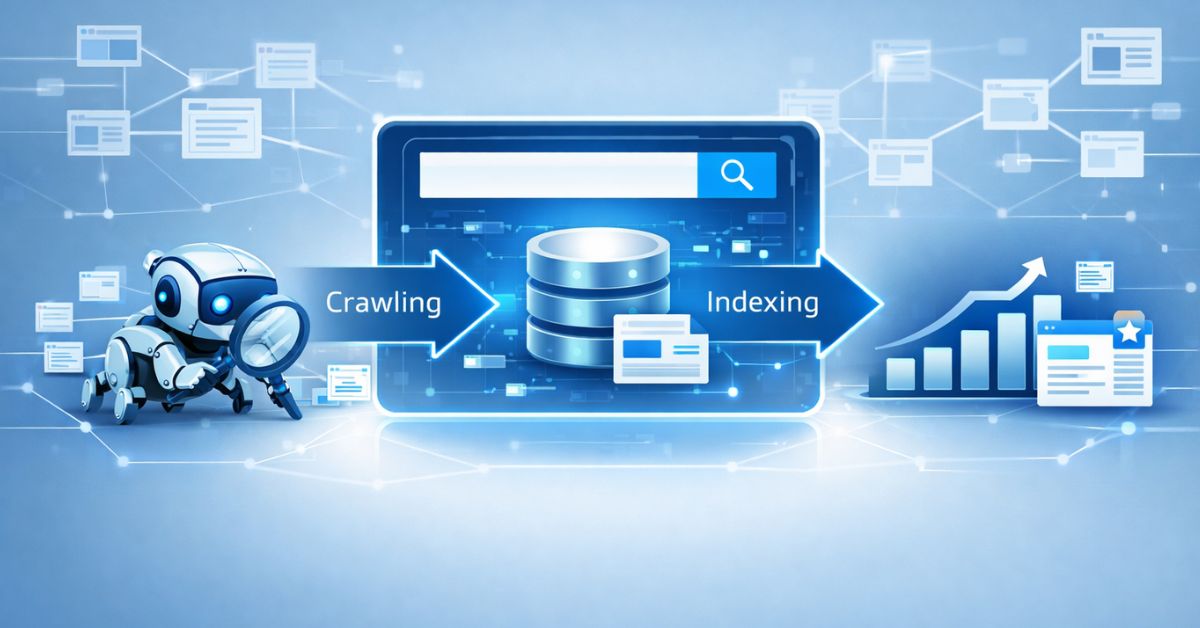
Search engines like Google, Bing, and Yahoo follow a structured process to discover, store, and rank web pages. This process includes crawling, indexing, and ranking. Once you understand these three core stages, SEO becomes much easier and more logical.
Let’s break it down in simple terms.
What Is SEO?
SEO (Search Engine Optimization) is the process of optimizing a website to improve its visibility in search engine results pages (SERPs). The goal of SEO is to rank higher for relevant keywords so users can find your website organically (without paid ads).
SEO basics include:
- Keyword research
- On-page SEO
- Technical SEO
- Content optimization
- Link building
But before applying these techniques, you must understand how search engines process information.
How Search Engines Actually Work
Search engines follow three main steps:
- Crawling
- Indexing
- Ranking
Let’s understand each step in detail.
Crawling – How Search Engines Discover Content
Crawling is the first step in how search engines work. Search engines use automated bots called crawlers or spiders (Googlebot is Google’s crawler) to discover content on the internet.
These bots:
- Visit web pages
- Follow internal and external links
- Scan text, images, and code
- Identify new and updated content
When you publish a new blog, Google doesn’t magically know about it. The crawler must find it first.
How to Help Crawlers:
- Create a sitemap
- Use proper internal linking
- Avoid broken links
- Ensure fast website speed
- Use a robots.txt file correctly
If your site is not crawlable, it cannot rank.
Indexing – Storing and Organizing Content
After crawling, the next step is indexing.
Indexing means storing and organizing the content found by crawlers into a massive database called the search index. Think of it as a digital library where every web page is categorized based on keywords and relevance.
During indexing, search engines analyze:
- Page title
- Meta description
- Keywords
- Headings (H1, H2, H3)
- Content quality
- Images and alt text
- Internal links
If your content is valuable and properly structured, it gets added to the index.
If not, it may not appear in search results.
Why Pages Don’t Get Indexed:
- Duplicate content
- Thin or low-quality content
- Noindex tags
- Technical errors
- Poor site structure
Understanding indexing is a key part of SEO basics.
Ranking – Deciding Which Page Appears First
Ranking is the final stage. When a user types a query like:
“SEO basics for beginners”
The search engine scans its index and selects the most relevant pages.
It then ranks them based on multiple ranking factors.
Important Ranking Factors Include:
- Keyword relevance
- Content quality
- Page experience
- Website speed
- Mobile-friendliness
- Backlinks
- Domain authority
- User experience signals
Google uses complex algorithms (like RankBrain and AI systems) to determine the best results.
The goal is simple:
Provide the most helpful and relevant answer to the user.
Understanding Search Intent
One major concept in SEO basics is search intent.
Search intent refers to the reason behind a user’s query.
There are four main types:
- Informational – “What is SEO?”
- Navigational – “Facebook login”
- Transactional – “Buy SEO course”
- Commercial – “Best SEO tools 2026”
If your content matches user intent, your ranking chances increase.
The Role of Keywords in SEO
Keywords are the foundation of SEO.
Search engines analyze keywords to understand what your page is about. However, modern SEO is not about keyword stuffing. It is about:
- Using the focus keyword naturally
- Adding related keywords
- Writing helpful content
- Maintaining proper structure
For example, in this article, we are naturally using terms like:
- SEO basics
- how search engines work
- search engine crawling
- indexing
- ranking factors
This helps search engines understand the topic clearly.
On-Page SEO Basics
On-page SEO refers to optimizing elements on your website.
Key On-Page SEO Elements:
- Optimized title tag
- Meta description
- Proper heading structure
- Internal linking
- Image optimization
- URL structure
- Keyword placement
Example of optimized URL:
yourwebsite.com/seo-basics-how-search-engines-work
On-page SEO helps search engines understand your content better.
Technical SEO Basics
Technical SEO ensures your website is technically sound.
Important aspects include:
- Website speed optimization
- Mobile responsiveness
- HTTPS security
- XML sitemap
- Structured data
- Fixing crawl errors
Even great content cannot rank if technical SEO is poor.
Why Content Quality Matters Most
Google’s algorithm focuses heavily on content quality.
High-quality content:
- Solves user problems
- Is easy to read
- Is well-structured
- Provides accurate information
- Offers real value
Avoid:
- Copy-paste content
- AI-generated spam without editing
- Keyword stuffing
- Thin content (less depth)
The better your content, the higher your chances of ranking.
How Google Updates Affect Rankings
Search engines regularly update their algorithms.
Google updates aim to:
- Remove spam
- Improve search quality
- Reward helpful content
- Penalize manipulative SEO tactics
Staying updated with SEO trends is part of mastering SEO basics.
Simple Example: How It All Works Together
Let’s say you write a blog titled:
“SEO Basics for Beginners”
Here’s what happens:
- Googlebot crawls your page.
- It analyzes and indexes your content.
- A user searches for “SEO basics guide.”
- Google scans its index.
- It ranks pages based on relevance and quality.
- If optimized properly, your page appears in results.
That’s the full cycle of how search engines work.
Final Thoughts
Understanding SEO basics and how search engines actually work is essential for every digital marketing student and professional. SEO is not about tricks; it is about helping search engines understand your content and providing real value to users.
Remember the three pillars:
Crawling → Indexing → Ranking
Once you understand this system, SEO becomes strategic instead of confusing.
Master the fundamentals, apply best practices, and keep learning. Search engines reward consistency and quality.
Top Blog Posts