What Makes a Course Truly Placement-Oriented?
 Learning Management System by Prayug Editor | Mar 2, 2026


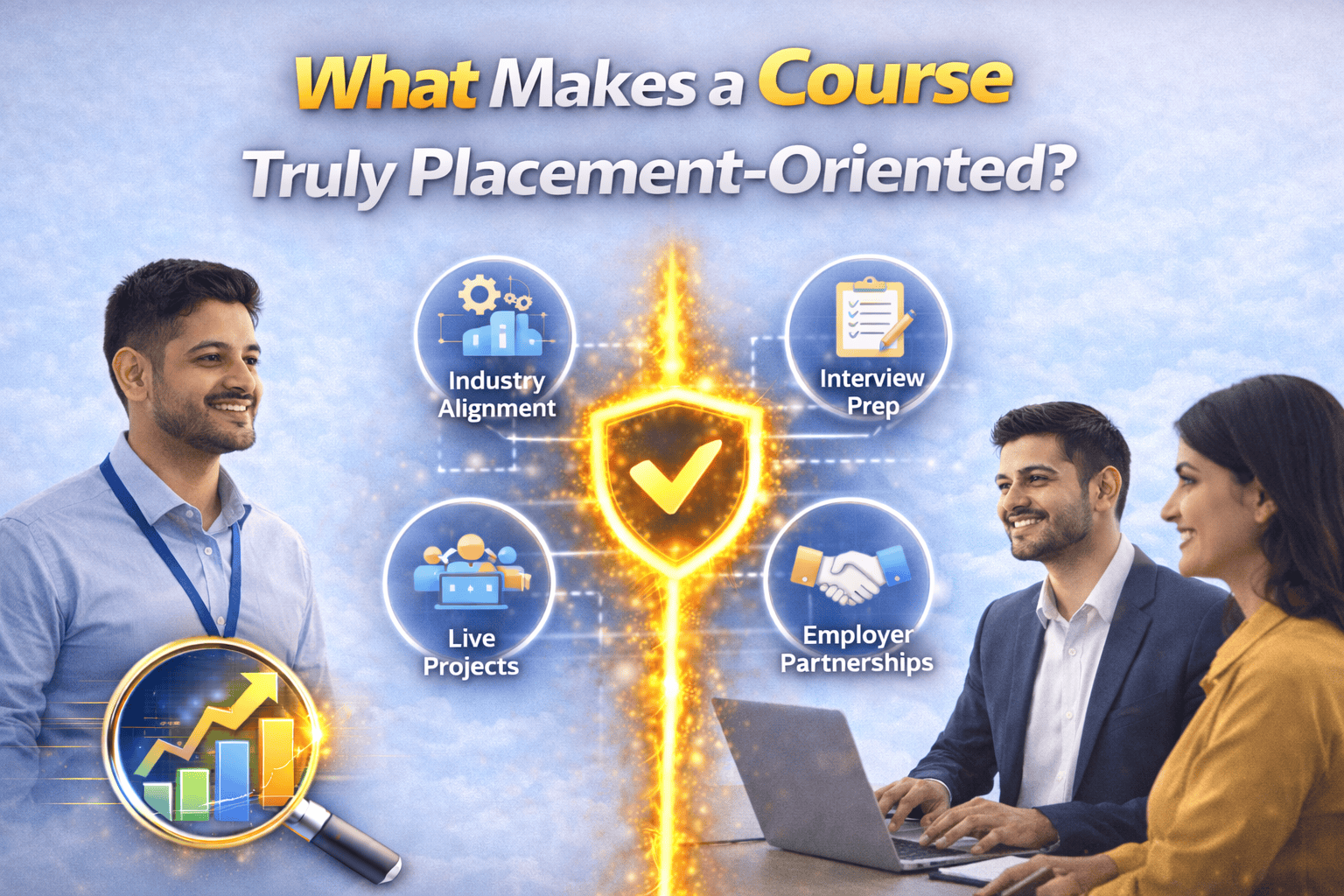
If you are looking for a course in India today, everywhere it will be the same phrase that you will hear:
“100% Placement-Oriented Course.”
It sounds promising.
It sounds safe.
It sounds like the right thing to do.
But after enrolling, some students find something that feels awkward:
The course teaches content…
but he doesn’t feel job-ready yet.
So what does it actually mean for a course to be truly placement-oriented — and not just a marketing cliché?
Let’s talk honestly.
First Reality Check: Placement-Oriented Doesn’t Mean Easy Jobs
What a placement-oriented course does't mean 1.
- Guaranteed jobs
- Instant offers
- Zero effort from students
- Shortcut to employment
Instead, it means:
The curriculum is employability-driven from start to finish.
That difference is huge.
Why Many Courses Fail to Help With Placements
Some courses focus heavily on:
- Theory
- Recorded lectures
- Tool demonstrations
- Certification completion
But recruiters look for:
- Practical ability
- Problem-solving
- Communication
- Real work exposure
When courses are out of sync with hiring needs, students complete learning — but falter in interviews.
The Core Question You Should Ask
Before joining any course, ask:
“Will such a course enable me to function in a real job interview?”
If you can’t, the course may not be as placement-focused as it claims to be.
- Job Role–Based Curriculum (Not Generic Syllabus)
A placement-focused program begins with a question:
“What jobs are students getting ready for?”
Good courses:
- Define target roles clearly
- Teach tools that are used in all of those jobs
- Align training with industry expectations
Example:
Learning Excel randomly ≠ placement-focused.
Studying Excel for data reporting jobs = job oriented.
- Practical, Project-Based Learning
Recruiters believe more in projects than certificates.
A truly placement-oriented course includes:
- Real-world problems
- Practical assignments
- Industry-style tasks
- Project reviews
Projects help students:
- Build portfolios
- Explain their work
- Gain interview confidence
Without projects, placements become harder.
- Live Learning & Doubt-Solving Support
Placement-oriented learning requires:
- Real interaction
- Feedback
- Clarification
Why?
Because interviews measure comprehension — not video playthrough.
Live learning helps students:
- Ask questions
- Avoid knowledge gaps
- Improve communication skills
This directly impacts placement success.
- Resume & Interview Preparation Built Into the Course
What Makes a Course Placement-focused? Courses are placement-oriented when they contain:
- Resume building sessions
- Mock interviews
- HR question practice
- Technical explanation training
It’s unfortunate, but many students don’t bomb interviews because they lack understanding, but rather just can’t communicate it.
A good course will prepare you for that.
- Industry-Relevant Tools & Updated Skills
Placements-oriented courses are not going to teach you ancient tools.
They focus on:
- Current industry demand
- Practical workflows
- Job-relevant technologies
This put students in line with real hiring trends — a boon in fast-evolving industries.
- Portfolio Development (Proof of Skills)
A good course that’s focused on placement can help students to establish:
- Dashboards
- Campaigns
- Applications
- Reports
- Case studies
Portfolios are the answer to the recruiter’s primary question:
“What has this candidate actually accomplished?”
- Career Guidance & Placement Assistance
Real placement-oriented courses include:
- Job role guidance
- Interview opportunities
- Placement support teams
- Career counselling
Quick note: placement help assists you — it doesn’t do the work for you.
The best is when kids have hands on.
Red Flags: When a Course Is NOT Placement-Oriented
Be cautious if:
- Everything is pre-recorded only
- No projects are included
- No mentor feedback exists
- No interview preparation is offered
- Placement claims sound unrealistic
Remember:
Marketing promises ≠ placement readiness.
Why Placement-Oriented Learning Matters More in India
India’s job market is:
- Highly competitive
- Skill-driven
- Fast-paced
Recruiters don’t just ask:
“What did you study?”
They ask:
“Can you start working quickly?”
Placement-oriented courses teach students to expect that.
How Prayug Designs Courses Around Real Placement Outcomes
At Prayug, placement orientation is designed on the lines of learning structure — not tacked on after the fact.
The focus is on:
- Job-role-based curriculum
- Live instructor-led training
- Real-time projects
- Portfolio creation
- Resume and interview readiness
- Career support and placement assistance
The goal is simple:
Students shouldn’t simply take classes — they should become employable.
Final Words: A Course Is Placement-Oriented Only If It Changes Outcomes
A genuinely placement-centric course does much more than teach.
It:
- Builds confidence
- Creates proof of skills
- Prepares you for interviews
- Aligns you with real jobs
Before selecting any course, ask yourself:
“Will this prepare me for a job — or just help me complete the course?”
Because in the job market today, it makes a difference.
Top Blog Posts