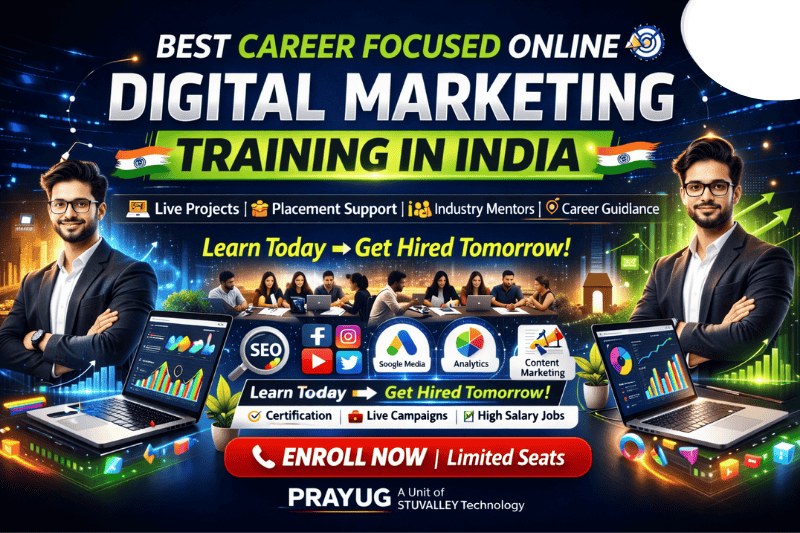
Best Career Focused Online Digital Marketing Training in India PRAYUG A Unit of STUVALLEY Technology
 Learning Management System by Prayug Editor | Feb 19, 2026


Introduction
Course completion sometimes leaves students unsure about professional obligations. The gap results mostly from the fact that most education explains ideas but does not enhance practical ability. Companies choose candidates who may handle campaigns, know consumer behavior, and boost marketing results without direct supervision.
PRAYUG offers career-oriented digital marketing training geared toward actual business demands. Every module is arranged with a job function so that students know what activities they will carry out following recruitment and how to properly carry out those tasks.
Career-focused training equips people not only to understand marketing but also to operate as marketing professionals able to plan, carry out, analyze, and maximize digital campaigns.
Learning Marketing Versus Developing a Career
Learning marketing means acquiring information. Constructing a career necessitates decision-making and operating effectiveness.
Career Readiness Calls For:
• Responsibility management
• Result measurement
• Strategic thinking
• Problem-solving ability
• Communication skills
Training links these elements with real-life application.
Framework of Structured Training
Stage 1 – Foundation Knowledge
Students become familiar with platform logic.
Topics Covered:
• Customer journey mapping
• Marketing funnel behavior
• Channel selection logic
• Psychology of conversion
This helps students understand why a method is effective before utilizing it.
Stage 2 – Practical Execution
Daily activities of learners resemble those of experts.
Implementation Tasks:
• Campaign setup
• Audience segmentation
• Keyword arrangement
• Content positioning
• Tracking installation
Hands-on experience helps develop confidence.
Stage 3 – Performance Monitoring
Students constantly evaluate campaign results.
Performance Measures Studied:
• Click-through rate
• Conversion rate
• Engagement ratio
• Cost efficiency
Understanding metrics is essential for growth roles.
Stage 4 – Optimization Method
Professionals enhance performance through analysis.
Optimization Techniques:
• Target refinement
• Ad variation testing
• Landing page improvement
• Budget allocation revisions
Stage 5 – Professional Reporting
Students present campaign results logically.
Communication Skills Developed:
• Report writing
• Data interpretation
• Strategy explanation
• Recommendation presentation
Main Career Skills Cultivated
Strategic Thinking
Choosing the right objective and channel depending on company demands.
Analytical Skills
Understanding trends in campaign performance data.
Performance Accuracy
Proper ad placement and tracking system configuration.
Decision-Making
Selecting optimization techniques based on outcomes.
Professional Communication
Ensuring stakeholders clearly understand marketing results.
Practical Modules Included
SEO Career Module
• Website assessment
• Content structure redesign
• Authority development
• Ranking progress monitoring
Advertising Career Module
• Campaign development
• Conversion tracking
• Retargeting strategy
• Budget optimization
Social Media Career Module
• Audience engagement planning
• Lead generation initiatives
• Creative performance comparison
Analytics Career Module
• Traffic analysis
• Funnel drop detection
• ROI reporting
How Career-Oriented Training Assists in Interviews
Recruiters evaluate thinking capacity over memorized definitions.
Candidates groomed practically can:
• Describe strategies to improve campaigns
• Interpret data logically
• Recommend business approaches
• Demonstrate dashboard familiarity
This elevates the chance of selection.
Path to Career Advancement
Beginner Stage:
• Marketing Executive
• Campaign Assistant
Mid-Level:
• Performance Marketer
• Strategy Specialist
Advanced:
• Digital Marketing Manager
• Growth Consultant
Skill development and measurable results drive progression.
Preparation for the Workplace Environment
Training replicates actual professional settings:
• Deadlines
• Performance targets
• Client communication
• Reporting schedules
This reduces first-job anxiety.
Significance of Ongoing Practice
Marketing tools change constantly. Professionals must:
• Adapt strategies
• Explore new ideas
• Monitor algorithm updates
Training develops the habit of continuous learning.
Frequently Asked Questions
1. Would this fit new graduates?
Yes, training begins from the fundamentals.
2. Will I study strategic planning?
Yes, planning is a major component of the curriculum.
3. Are practical initiatives covered?
Yes, learners run real campaigns during training.
4. Can working professionals enroll?
Yes, the structure is flexible.
5. Does it boost interview confidence?
Hands-on experience strengthens technical responses.
6. Will I grasp marketing analytics?
Yes, analytics interpretation is included.
7. Are communication abilities addressed?
Yes, reporting practice enhances communication skills.
8. Is it useful for career change?
Yes, real exposure supports smooth transition.
9. How are performance reviews conducted?
Through campaign implementation and analysis projects.
10. After training, may I oversee company promotion?
Yes, students can independently market products or services.
Conclusion
Career-oriented digital marketing education prepares students for responsibilities rather than examinations. When individuals understand platforms, implement strategies, analyze results, and present insights professionally, they integrate smoothly into industry roles. Practical learning ensures confidence, employability, and consistent professional advancement in the digital marketing field.
Call to Action
Call / WhatsApp:+91 96438 02216
Visit: www.prayug.com
Choose PRAYUG – the best Job oriented Training services in India and progress confidently toward Skill Development and better Career.
Top Blog Posts